Penatatran IT 2007
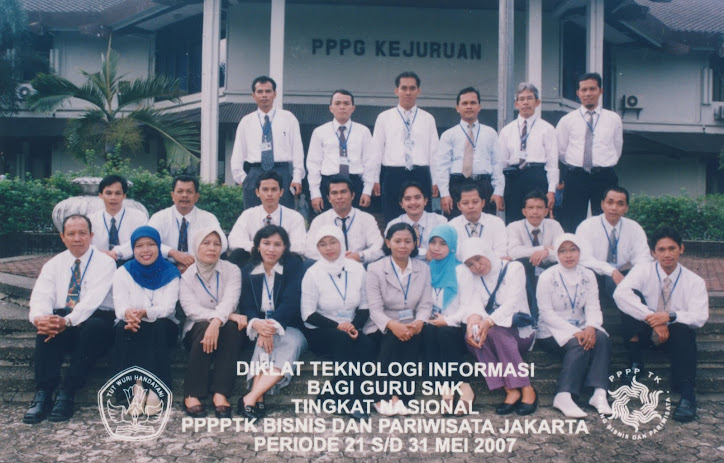
pose bersama rekan2 depan p3gk Sawangan
Wednesday, June 16, 2010


Wednesday, April 14, 2010
DANAREKSA MAY BUY STAKE IN PT SEMEN GRESIK
Danareksa may buy stake in PT Semen Gresik
Nani Afrida , The Jakarta Post , Jakarta | Tue, 04/13/2010 9:04 AM | Business
The State-Owned Enterprises Minister, Mustafa Abubakar, revealed Monday that the government will appoint state investment company PT Danareksa to buy the Rajawali Group’s remaining 1.25 percent stake in PT Semen Gresik.
“Danareksa has submitted a proposal on the plan. I think it has the financial capacity to buy Semen Gresik’s shares.
They have the money to carry out the transaction,” Mustafa said in Jakarta on Monday.
According to Mustafa, Danareksa may cooperate with state enterprises to buy the stake, which is worth Rp 516 billion (US$57.2 million). “We will meet with the finance minister [Sri Mulyani Indrawati] to ask for her approval,” he said.
The minister had previously announced that either Danareksa or state asset management company PT PPA would acquire the stake because it was quite prospective.
At that time, PPA said it would be ready to acquire Rajawali’s 1.25 percent stake (73.8 million shares) in Semen Gresik. However, the minister said that so far only Danareksa had discussed the plan and seemed ready to carry out the deal.
Danareksa corporate secretary Bondan Pristiwandana confirmed the planned acquisition, saying the company had used the company’s internal funds to buy the stake.
Rajawali Group offered the government its remaining 1.25 percent stake in Semen Gresik after it sold 23.7 percent of it to three investors through JP Morgan, which acted as the underwriter.
The company did not name the buyers but they bought 1.35 billion shares (22.84 percent), 45 million shares (0.76 percent) and 3 million shares (0.05 percent), respectively, at Rp 7,000 per share.
Rajawali, controlled by Peter Sondakh, is estimated to book US$1.1 billion from the sale. The sale is the largest equity transaction in Indonesia since June 2008, when coal miner PT Adaro Energy raised US$1.3 billion during an initial public offering.
Rajawali became a shareholder in in the company after it bought a 24.90 percent stake in Gresik from Mexican cement maker Cemex SAB in July 2006 for US$336.7 million.
The government has a 51 percent stake in the company with the remainder owned by the public.
Rajawali became a major shareholder in Gresik after it bought a 24.9 percent stake in Gresik from Mexican cement maker Cemex SAB (CX) in July 2006 for $336.7 million.
Nani Afrida , The Jakarta Post , Jakarta | Tue, 04/13/2010 9:04 AM | Business
The State-Owned Enterprises Minister, Mustafa Abubakar, revealed Monday that the government will appoint state investment company PT Danareksa to buy the Rajawali Group’s remaining 1.25 percent stake in PT Semen Gresik.
“Danareksa has submitted a proposal on the plan. I think it has the financial capacity to buy Semen Gresik’s shares.
They have the money to carry out the transaction,” Mustafa said in Jakarta on Monday.
According to Mustafa, Danareksa may cooperate with state enterprises to buy the stake, which is worth Rp 516 billion (US$57.2 million). “We will meet with the finance minister [Sri Mulyani Indrawati] to ask for her approval,” he said.
The minister had previously announced that either Danareksa or state asset management company PT PPA would acquire the stake because it was quite prospective.
At that time, PPA said it would be ready to acquire Rajawali’s 1.25 percent stake (73.8 million shares) in Semen Gresik. However, the minister said that so far only Danareksa had discussed the plan and seemed ready to carry out the deal.
Danareksa corporate secretary Bondan Pristiwandana confirmed the planned acquisition, saying the company had used the company’s internal funds to buy the stake.
Rajawali Group offered the government its remaining 1.25 percent stake in Semen Gresik after it sold 23.7 percent of it to three investors through JP Morgan, which acted as the underwriter.
The company did not name the buyers but they bought 1.35 billion shares (22.84 percent), 45 million shares (0.76 percent) and 3 million shares (0.05 percent), respectively, at Rp 7,000 per share.
Rajawali, controlled by Peter Sondakh, is estimated to book US$1.1 billion from the sale. The sale is the largest equity transaction in Indonesia since June 2008, when coal miner PT Adaro Energy raised US$1.3 billion during an initial public offering.
Rajawali became a shareholder in in the company after it bought a 24.90 percent stake in Gresik from Mexican cement maker Cemex SAB in July 2006 for US$336.7 million.
The government has a 51 percent stake in the company with the remainder owned by the public.
Rajawali became a major shareholder in Gresik after it bought a 24.9 percent stake in Gresik from Mexican cement maker Cemex SAB (CX) in July 2006 for $336.7 million.
Saturday, April 10, 2010
Google pull-back
Microsoft says in the midst of major China R&D push
* Shanghai, Beijing R&D centres could house up to 15,000
* Expending efforts to
Sat Apr 10, 2010 6:29am EDT
By Chen Min and Melanie Lee
BOAO, China, April 10 (Reuters) - Microsoft (MSFT.O) remains strongly committed to China, even after Google's (GOOG.O) recent decision to shutter the China-based version of its search engine over censorship issues, a top executive said.
The U.S. software giant is planning to spend $500 million this year alone on its fast-growing research and development complex in China, said Zhang Yaqin, corporate vice-president in charge of the company's R&D activities in China.
"Microsoft puts great importance on China's development," Zhang told Reuters on the sidelines of the Boao Forum on southern China's tropical Hainan island. "China has been a sales center for Microsoft from early on, and later became an R&D center. Now it is a strategic center."
He said a Microsoft R&D center in Shanghai would be able to house up to 1,500 people in its first stage, eventually expandable to 7,000. The company was also putting its Asia R&D headquarters in Beijing, he added, at a centre now under construction that will be able to accommodate 8,000 researchers.
Microsoft is active on a number of fronts in China. Apart from software sales and R&D, the company also operates instant messaging and other Web services in China, including a Chinese version of its highly-hyped Bing search engine that it hopes will someday take on Google.
Last month, Google announced that it would close its Google.cn search engine following a hacking attack that it believes originated in the country. The move was also a protest over China's heavy-handed policies that require all website operators to filter results on sensitive topics like Tibetan independence and the banned Falun Gong spiritual movement.
Despite closing its search site, Google still operates its own R&D center in China, and sells advertising there for its Chinese language search sites.
Microsoft launched a beta version of its Bing search engine in China last June, but has yet to pick up any major share from market leaders Google and homegrown search engine Baidu (BIDU.O), which collectively control more than 90 percent of the market.
"Bing's technology and markets have just started to develop," Zhang said. "In China we are already expending a big effort in this. Even though we are still well behind the market leaders, we need to become even more committed and be patient."
"Bing has huge potential, so we are very optimistic about the future," he said.
China has the world's largest Internet market by users, with 384 million at the end of last year, according to government statistics.
The value of China's search market rose 38.8 percent in 2009 to 7.15 billion yuan ($1 billion), on the back of greater Internet penetration, said research firm Analysys International. Baidu had 60.9 percent of the market by revenue, while Google (GOOG.O) had 31.8 percent.
* Shanghai, Beijing R&D centres could house up to 15,000
* Expending efforts to
Sat Apr 10, 2010 6:29am EDT
By Chen Min and Melanie Lee
BOAO, China, April 10 (Reuters) - Microsoft (MSFT.O) remains strongly committed to China, even after Google's (GOOG.O) recent decision to shutter the China-based version of its search engine over censorship issues, a top executive said.
The U.S. software giant is planning to spend $500 million this year alone on its fast-growing research and development complex in China, said Zhang Yaqin, corporate vice-president in charge of the company's R&D activities in China.
"Microsoft puts great importance on China's development," Zhang told Reuters on the sidelines of the Boao Forum on southern China's tropical Hainan island. "China has been a sales center for Microsoft from early on, and later became an R&D center. Now it is a strategic center."
He said a Microsoft R&D center in Shanghai would be able to house up to 1,500 people in its first stage, eventually expandable to 7,000. The company was also putting its Asia R&D headquarters in Beijing, he added, at a centre now under construction that will be able to accommodate 8,000 researchers.
Microsoft is active on a number of fronts in China. Apart from software sales and R&D, the company also operates instant messaging and other Web services in China, including a Chinese version of its highly-hyped Bing search engine that it hopes will someday take on Google.
Last month, Google announced that it would close its Google.cn search engine following a hacking attack that it believes originated in the country. The move was also a protest over China's heavy-handed policies that require all website operators to filter results on sensitive topics like Tibetan independence and the banned Falun Gong spiritual movement.
Despite closing its search site, Google still operates its own R&D center in China, and sells advertising there for its Chinese language search sites.
Microsoft launched a beta version of its Bing search engine in China last June, but has yet to pick up any major share from market leaders Google and homegrown search engine Baidu (BIDU.O), which collectively control more than 90 percent of the market.
"Bing's technology and markets have just started to develop," Zhang said. "In China we are already expending a big effort in this. Even though we are still well behind the market leaders, we need to become even more committed and be patient."
"Bing has huge potential, so we are very optimistic about the future," he said.
China has the world's largest Internet market by users, with 384 million at the end of last year, according to government statistics.
The value of China's search market rose 38.8 percent in 2009 to 7.15 billion yuan ($1 billion), on the back of greater Internet penetration, said research firm Analysys International. Baidu had 60.9 percent of the market by revenue, while Google (GOOG.O) had 31.8 percent.
Free Trade Agreement
Indonesia Vows to Assist Citizens Hit by ACFTA
Minister of Trade Mari Elka Pangestu reiterated on Tuesday that the government would no longer pursue a renegotiation of the Asean-China Free Trade Agreement but would focus on seeking ways to help reduce the negative impact on local industries.
“We’ll implement it in line with our commitment,” Mari told reporters while visiting state-owned steel maker PT Krakatau Steel in Cilegon, Banten.
The Indonesian Chamber of Commerce and Industry (Kadin), a powerful business lobby, on Monday urged the government to continue pushing for a partial delay in the implementation of the ACFTA as some local industries were not yet ready to compete with Chinese manufacturers.
Erlangga Hartanto, a senior lawmaker from the House of Representatives’ Commission VI, which oversees trade, also revealed plans to set up a working committee to monitor the implementation of the ACFTA.
Domestic manufacturers had asked the government to seek a delay in implementation of the free trade deal for 228 product categories.
Mari said Indonesia and China had agreed to form a working committee within the next two months to study and formulate measures to help ease the negative impact of the deal on local industries such as steel, textiles and footwear.
From the Indonesian side, the working committee would consist of officials from the Ministry of Trade, Ministry of Industry, Ministry of Finance, Coordinating Ministry for the Economy, as well as industry associations, Mari said.
She added that the committee would also monitor trade developments between Indonesia and China, and that China has agreed to ensure “sustainable” and “balanced” trade relations, meaning that it will import more from Indonesia if its trade surplus continues to widen in the future.
China has also agreed to provide loans and other facilities for capacity building among local industries, Mari said.
“This is a more comprehensive way [to solve the problem] than just struggling to renegotiate tariffs,” Deputy Trade Minister Mahendra Siregar said. ”We should not [get] overly bogged down by the negative impact, but [seek ways] to deal with it.”
Minister of Industry MS Hidayat said it was a “pity” the effort to seek a renegotiation of the trade deal had been abandoned but added that the decision should be accepted.
Minister of Trade Mari Elka Pangestu reiterated on Tuesday that the government would no longer pursue a renegotiation of the Asean-China Free Trade Agreement but would focus on seeking ways to help reduce the negative impact on local industries.
“We’ll implement it in line with our commitment,” Mari told reporters while visiting state-owned steel maker PT Krakatau Steel in Cilegon, Banten.
The Indonesian Chamber of Commerce and Industry (Kadin), a powerful business lobby, on Monday urged the government to continue pushing for a partial delay in the implementation of the ACFTA as some local industries were not yet ready to compete with Chinese manufacturers.
Erlangga Hartanto, a senior lawmaker from the House of Representatives’ Commission VI, which oversees trade, also revealed plans to set up a working committee to monitor the implementation of the ACFTA.
Domestic manufacturers had asked the government to seek a delay in implementation of the free trade deal for 228 product categories.
Mari said Indonesia and China had agreed to form a working committee within the next two months to study and formulate measures to help ease the negative impact of the deal on local industries such as steel, textiles and footwear.
From the Indonesian side, the working committee would consist of officials from the Ministry of Trade, Ministry of Industry, Ministry of Finance, Coordinating Ministry for the Economy, as well as industry associations, Mari said.
She added that the committee would also monitor trade developments between Indonesia and China, and that China has agreed to ensure “sustainable” and “balanced” trade relations, meaning that it will import more from Indonesia if its trade surplus continues to widen in the future.
China has also agreed to provide loans and other facilities for capacity building among local industries, Mari said.
“This is a more comprehensive way [to solve the problem] than just struggling to renegotiate tariffs,” Deputy Trade Minister Mahendra Siregar said. ”We should not [get] overly bogged down by the negative impact, but [seek ways] to deal with it.”
Minister of Industry MS Hidayat said it was a “pity” the effort to seek a renegotiation of the trade deal had been abandoned but added that the decision should be accepted.
Subscribe to:
Comments (Atom)